

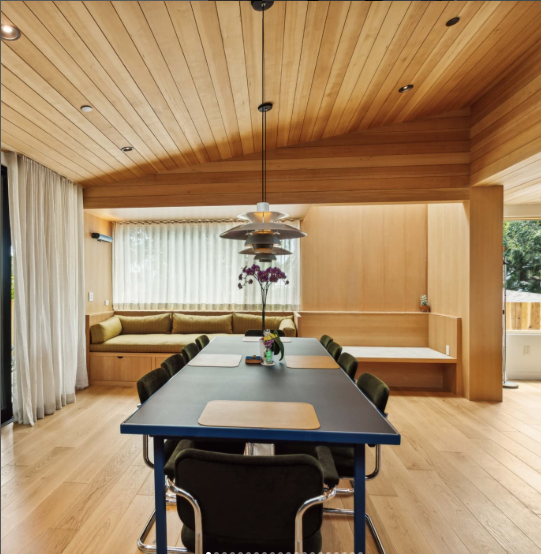

Building upon the foundational understanding of how How Mathematics Preserves Shapes in Modern Design, this article explores the intricate role of symmetry as a vital mathematical principle shaping contemporary aesthetics, stability, and cultural expression. Symmetry not only appeals visually but also underpins the structural and functional integrity of modern creations, bridging art and science seamlessly.
- 1. The Role of Symmetry in Enhancing Visual Harmony in Modern Design
- 2. Mathematical Foundations of Symmetry: Beyond Basic Patterns
- 3. Symmetry as a Tool for Structural Stability and Functionality
- 4. Cultural and Historical Perspectives on Symmetry in Design
- 5. Technological Innovations Facilitating Symmetry in Modern Design
- 6. Challenges and Limitations of Applying Symmetry
- 7. Bridging Back to Mathematical Principles: How Symmetry Preserves Shapes
1. The Role of Symmetry in Enhancing Visual Harmony in Modern Design
a. Types of symmetry employed in contemporary visual compositions (e.g., bilateral, radial, translational)
Modern designers harness various forms of symmetry to craft visually compelling compositions. Bilateral symmetry, where one side mirrors the other, is prevalent in branding logos and product design, creating a sense of stability and familiarity. Radial symmetry, radiating from a central point, is often used in architectural domes and decorative motifs, evoking harmony and unity. Translational symmetry involves repeating patterns across space, as seen in tile work and digital textures, fostering rhythm and movement. These symmetry types are not mutually exclusive; contemporary designs often blend them to achieve complex visual effects.
b. Psychological impact of symmetry on viewer perception and emotional response
Research indicates that symmetry positively influences perception by eliciting feelings of order, balance, and beauty. Psychologically, symmetrical designs are perceived as more harmonious and trustworthy, often triggering subconscious emotional responses that enhance aesthetic appeal. For instance, the symmetry in modern architecture like the Louvre Pyramid or Apple Park Visitor Center generates feelings of stability and elegance, reinforcing brand identity and user comfort.
c. Case studies of iconic modern designs utilizing symmetry for aesthetic appeal
The Guggenheim Museum Bilbao exemplifies the strategic use of symmetry in its flowing, reflective surfaces that balance organic forms with geometric precision. Similarly, Zaha Hadid’s MAXXI Museum employs axial symmetry to create dynamic yet stable spatial experiences. These cases demonstrate how symmetry enhances aesthetic impact while supporting structural innovation, aligning with the broader principles discussed in parent article.
2. Mathematical Foundations of Symmetry: Beyond Basic Patterns
a. Group theory and its application in classifying symmetry operations in design
Group theory provides a rigorous framework for understanding symmetry through mathematical structures known as groups. In design, it classifies symmetry operations such as rotations, reflections, translations, and glide reflections. For example, wallpaper groups categorize 17 distinct patterns that can tile a plane seamlessly, guiding digital artists and architects in creating complex, repetitive motifs that are both mathematically sound and visually captivating.
b. Fractals and self-similarity as a form of complex symmetry in digital art and architecture
Fractals exemplify infinite self-similarity, where similar patterns recur at different scales, embodying a form of symmetry that transcends traditional geometric forms. Digital artists leverage fractals like the Mandelbrot set to generate mesmerizing visuals, while architects incorporate fractal principles in facade designs that mimic natural patterns, such as the branching of trees or river networks, promoting sustainability and aesthetic harmony.
c. Algorithms and computational methods for generating symmetrical designs efficiently
Advanced algorithms, including symmetry detection and generation algorithms, automate the creation of complex patterns. Software like Grasshopper for Rhino and Adobe’s generative design tools enable designers to experiment with symmetrical forms rapidly, reducing manual effort and increasing precision. These computational methods align with the ongoing evolution of design, allowing for innovative symmetry applications that were previously infeasible.
3. Symmetry as a Tool for Structural Stability and Functionality
a. How symmetrical principles contribute to structural integrity in architecture
Symmetry distributes loads evenly across structures, enhancing stability and durability. For instance, the classical symmetry in bridges and arches ensures that stresses are balanced, reducing material fatigue. Modern skyscrapers like the Burj Khalifa utilize symmetrical core layouts to withstand wind and seismic forces, exemplifying how mathematical symmetry principles underpin safety and longevity.
b. Balancing symmetry with asymmetry for innovative and functional design solutions
While symmetry offers stability, intentional asymmetry fosters innovation, visual interest, and adaptability. Architects like Frank Gehry blend symmetric structural elements with asymmetric forms to create dynamic, functional spaces that challenge traditional aesthetics without compromising safety or function. This balance exemplifies how symmetry and asymmetry can coexist strategically to meet diverse design goals.
c. Examples of modern engineering projects that leverage symmetry for durability
The Millau Viaduct in France employs symmetric cable arrangements to distribute loads efficiently, resulting in a lightweight yet robust structure. Similarly, the Beijing National Stadium (“Bird’s Nest”) uses symmetric steel frameworks to ensure seismic resilience and load distribution. These examples highlight symmetry’s crucial role in achieving structural excellence aligned with engineering principles.
4. Cultural and Historical Perspectives on Symmetry in Design
a. Evolution of symmetry use from traditional to modern contexts
Historically, symmetry has been central in religious, cultural, and artistic expressions—found in Greek temples, Islamic geometric art, and Chinese pagodas. In modern design, this reverence persists but is often complemented by asymmetrical and deconstructed forms, reflecting changing aesthetic paradigms. The evolution demonstrates a continuous dialogue between tradition and innovation, guided by mathematical principles.
b. Cross-cultural variations in symmetry preferences and their influence on design trends
Different cultures have unique approaches to symmetry. For example, Islamic art emphasizes complex, tessellated symmetries with intricate geometric patterns, while Western architecture historically favored bilateral symmetry for its sense of order. Contemporary global design increasingly merges these influences, creating hybrid styles that celebrate cultural diversity, often incorporating mathematical algorithms to achieve precise symmetry.
c. The resurgence of sacred and natural symmetries in contemporary sustainable design
Modern sustainable architecture draws inspiration from natural patterns exhibiting sacred symmetry, such as honeycombs or leaf venation. These biomimetic designs utilize symmetry to optimize material efficiency and energy performance. For instance, the Eden Project in the UK employs hexagonal modules inspired by natural tessellations, demonstrating how symmetry rooted in natural mathematics advances eco-friendly architecture.
5. Technological Innovations Facilitating Symmetry in Modern Design
a. CAD and 3D modeling tools that automate symmetrical pattern creation
Design software like AutoCAD, Rhino, and Revit incorporate symmetry tools that allow rapid, precise creation of symmetrical patterns. These tools enable designers to mirror, rotate, and replicate elements seamlessly, significantly reducing manual effort and error, thus pushing the boundaries of what is visually and structurally possible.
b. Artificial intelligence and machine learning in discovering novel symmetrical forms
AI-driven generative design algorithms analyze vast datasets to propose innovative symmetrical configurations that might elude human intuition. For example, machine learning models have been used to optimize facade patterns for energy efficiency while maintaining aesthetic symmetry, exemplifying how AI expands the creative potential rooted in mathematical principles.
c. Virtual reality and augmented reality applications for visualizing symmetrical structures in immersive environments
VR and AR technologies enable architects and designers to experience symmetrical structures in immersive settings before construction. This capability enhances understanding of spatial harmony, structural balance, and aesthetic impact, fostering more informed and innovative design decisions aligned with symmetry principles.
6. Challenges and Limitations of Applying Symmetry
a. Overcoming the risk of monotony and visual fatigue in symmetrical designs
Excessive symmetry can lead to predictable and dull visuals. To counteract this, designers incorporate controlled asymmetries, variations in scale, or contrasting elements, maintaining viewer engagement without sacrificing the harmony that symmetry provides.
b. Constraints posed by physical, material, and environmental factors on perfect symmetry
Material limitations, construction tolerances, and environmental factors often prevent achieving perfect symmetry. Adaptive design techniques, such as parametric modeling, allow for slight adjustments that preserve perceived symmetry and structural integrity despite real-world constraints.
c. Strategies for integrating asymmetry intentionally to create dynamic and engaging designs
Incorporating asymmetry strategically introduces dynamism and uniqueness. Techniques include asymmetric lighting, varied textures, or intentional irregularities aligned with underlying mathematical frameworks, resulting in compelling, functional, and contextually relevant designs.
7. Bridging Back to Mathematical Principles: How Symmetry Preserves Shapes
a. Recap of how symmetry acts as a mathematical principle for shape preservation
Symmetry ensures that shapes retain their core properties under various transformations—rotations, reflections, translations—maintaining their fundamental form. This mathematical invariance is crucial for structural stability and aesthetic consistency, as discussed in the parent article. It guarantees that despite complex manipulations, the shape’s essence remains intact.
b. The interplay between symmetry and other mathematical concepts like tessellations and transformations
Tessellations demonstrate how symmetry enables pattern repetition without gaps or overlaps, grounded in mathematical transformations. These concepts interconnect seamlessly, allowing designers to generate intricate, mathematically sound visuals that enhance both beauty and functionality.
c. Final thoughts on the ongoing importance of symmetry in maintaining the integrity of modern design shapes
As design challenges evolve with advancing technology, the mathematical principles of symmetry remain vital. They underpin innovative aesthetics, structural resilience, and cultural expression, ensuring that shapes in modern design preserve their integrity while inspiring new forms. Embracing symmetry, both simple and complex, continues to be a cornerstone of aesthetic and functional excellence in the digital age.